
Regenerative agriculture 101: A guide to farming for the future
Learn how regenerative agriculture restores soil, improves biodiversity, and helps Australian farmers build climate-resilient systems.
What is regenerative agriculture?
Regenerative agriculture is more than just a set of sustainable practices; it is an outcome-driven philosophy designed to restore and enhance the land’s natural systems. By improving soil health, increasing biodiversity, and strengthening the resilience of farming systems, regenerative agriculture helps mitigate climate change, supports productivity, and builds adaptive farming systems for future generations.
Regenerative agriculture is increasingly recognised as a key part of Australia’s agrifood transformation. The Agrifood Innovation Guide explores how regenerative practices are being scaled alongside new technologies to improve soil health, biodiversity, and climate resilience.
READ MORE: https://www.growag.com/highlights/article/agrifood-innovation-guide
What makes regenerative agriculture different from sustainable agriculture
While sustainable agriculture focuses on minimising harm to the farm ecosystem, regenerative agriculture goes further. It seeks to actively improve ecosystems over time –working with natural systems to restore soil function, enhance biodiversity, and regenerate landscapes so they are healthier, more productive, and more resilient for future generations.
What are the benefits of regenerative agriculture?
Conventional farming practices such as intensive tillage, heavy chemical inputs, and monoculture cropping systems, have degraded soil structure, reduced soil organic carbon, diminished biodiversity, and contributed to agriculture’s emissions footprint. These impacts make farms more vulnerable to environmental stresses, including drought, extreme weather events, water scarcity, and nutrient loss.
By contrast, farmers adopting regenerative farming practices are restoring ecosystem function and realising a wide range of benefits, including:
Mitigating climate change
Regenerative agriculture sequesters carbon in soils through practices such as cover cropping, no-till farming, and compost application. These systems reduce net greenhouse gas emissions while increasing soil carbon stocks, contributing to climate change mitigation and building resilience to temperature and rainfall extremes.
Healthier, more productive soils
Through techniques like minimal tillage, compost application, and rotational cropping, regenerative agriculture improves soil structure, increases water-holding capacity, and enhances nutrient cycling. Soils with higher organic matter content support greater microbial activity, improved root growth, and more stable yields – even under variable climatic conditions.
If practice change is made within a soil carbon project, those healthier soils can also generate additional revenue streams for regenerative farmers. Organisations such as Carbon Link allow farmers to participate in carbon credit markets, and receive payments for carbon offset initiatives.
Enhanced water use efficiency
By promoting nutrient cycling and pest regulation, regenerative agriculture reduces reliance on synthetic inputs. Cover crops, tree planting, and soil organic matter management improve infiltration, retention, and water-use efficiency, while reducing nutrient runoff. These practices support ecosystem services, including pollination and microbial diversity, creating resilient and productive landscapes.
Increased biodiversity
Regenerative systems foster both above- and below-ground biodiversity. Maintaining diverse cover crops, integrating trees into pasture systems, and managing grazing practices to maintain groundcover supports pollinators, soil microbial diversity, and wildlife habitats – strengthening ecosystem resilience and ecological stability.
Improved human and animal health
Regenerative agriculture reduces the use of synthetic fertilisers and pesticides by enhancing natural nutrient cycling, soil biodiversity, and ecosystem function. This lowers exposure risks for farm operators, livestock, and nearby communities. Soils enriched by regenerative practices produce plants with higher concentrations of essential nutrients – such as vitamins, minerals, and antioxidants – resulting in more nutrient-dense food for humans and livestock. By improving both food quality and environmental safety, regenerative farming contributes to healthier diets, stronger livestock, and more resilient farming communities.
How to implement regenerative agriculture practices
Regenerative agriculture is an adaptive approach to farming, rather than a fixed set of rules. Practices vary across farms according to the production system (cropping vs grazing, for example), the farmer’s objectives, and the landscape potential.
Before transitioning to regenerative farming, a farmer firstly needs to understand their soil health, biodiversity stock, and current practices – and how they may impact overall ecosystem function. Organisations like Carbon Capture Shield provide advanced ecosystem sampling, with Quantitative Soil Sample Analysis Automation Technology using AI and machine learning models to provide actionable insights.
Here are some common regenerative farming practices used across Australia:
Cover crops
Cover crops such as clover, millet, or oats are planted between cash crops or during fallow periods to protect and improve the soil – while offering farmers the ability to graze or cut hay. Cover crops reduce soil erosion by binding soil particles with plant roots, suppress weeds by outcompeting them for light and nutrients, and enhance nutrient cycling.
Legume cover crops fix atmospheric nitrogen, reducing the need for synthetic fertilisers. Their root systems also improve soil structure, increasing water infiltration and retention, while supporting a diverse soil microbiome that boosts overall ecosystem resilience.
Rotational grazing
Rotational grazing involves systematically moving livestock between paddocks to prevent overgrazing and promote pasture recovery. This practice can enhance soil carbon storage by fostering deep-rooted, multi-species perennial pastures, which are more effective at sequestering carbon compared to traditional grazing methods.
No-till farming
No-till farming is a cultivation method where the soil is left undisturbed by ploughing or tilling. Instead, seeds are planted directly into the soil, preserving soil structure, reducing erosion, sequestering carbon, retaining moisture, and enhancing soil health.
Composting
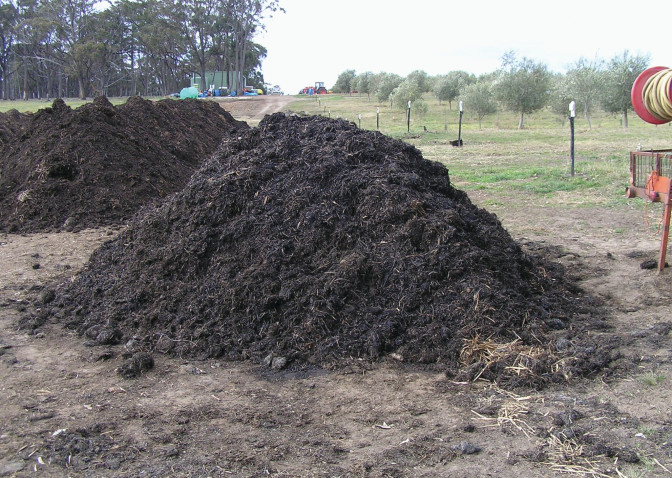
Composting transforms organic waste into nutrient-rich soil amendments. Compost application improves soil structure, increases soil water-holding capacity, and supports soil microbial diversity – leading to more resilient agricultural systems. Food2Soil transforms commercial food waste into fermented, biologically-enriched fertiliser that reintroduces vital nutrients and beneficial microbes to the soil – reducing reliance on synthetic fertilisers while enhancing plant resistance to environmental stress.
Agroforestry
Agroforestry integrates trees or woody perennials into crop and pasture systems. Agroforestry benefits farm ecosystems by improving soil fertility, enhancing biodiversity, conserving water, providing shade and shelter for crops and livestock, and mitigating climate change by sequestering carbon dioxide.
Building networks and support
Education and peer networks are crucial in scaling up the transition to regenerative farming – enabling farmers to learn from another’s experience of what works, and what doesn’t.
- Bright Tide runs accelerator programs to help startups scale solutions that enable regenerative agriculture.
- The Organic and Regenerative Investment Co-operative or ORICoop connects farmers with peers and investors aligned with organic and regenerative farming. It aims to nurture and increase the amount, productivity and diversity of organically and regeneratively managed land and food in Australia, while supporting farmers to be better land stewards.
- Geora helps agribusinesses and farmers leverage their data to access new markets for sustainability credits and finance their operations.
Embracing regenerative agriculture
Regenerative agriculture in Australia is central to climate action, ecosystem restoration, and long-term farm profitability. It is not about a single practice but a mindset, restoring balance between production and the ecosystems that underpin it.
By adopting regenerative principles, farmers can secure more resilient businesses while helping to shape a thriving future for Australian agriculture.
Want to learn more? Explore growAG.’s opportunities, research, and stories on how regenerative farming practices are being scaled across the country.
Frequently asked questions
What’s the difference between regenerative and organic agriculture?
Organic farming prioritises the elimination of synthetic inputs, but it does not automatically rebuild degraded ecosystems. Regenerative agriculture, by contrast, is outcome-driven: it focuses on restoring soil carbon, enhancing biodiversity, improving nutrient cycling, and increasing ecosystem resilience.
In Australia, regenerative approaches are increasingly being integrated with organic practices to achieve both organic market certification and measurable environmental outcomes.
Can regenerative agriculture be applied at scale?
Absolutely. Far from being a niche practice, regenerative agriculture is being implemented successfully across large-scale cropping and grazing enterprises. Techniques such as multi-species cover crops, rotational grazing, and no-till cropping are now being scaled with precision management tools, monitoring, and modelling to deliver soil health, carbon sequestration, and productivity gains over thousands of hectares.
How long does it take to see results from regenerative practices?
The timeline is multi-layered. Improvements in soil biology, infiltration, and pasture cover can appear within one to three seasons, while measurable gains in soil carbon, biodiversity, and climate resilience typically accumulate over five to ten years. Full ecosystem restoration, with associated economic and climate benefits, is a generational journey – one that compounds over decades when regenerative practices are sustained.
Agroecology vs regenerative agriculture — how do they relate?
Agroecology is a broad, systems-based framework that blends ecological principles with social equity and traditional knowledge. Regenerative agriculture, while informed by these ideas, is more pragmatic and outcome-focused, emphasising quantifiable improvements in soil health, carbon storage, and biodiversity on the farm.