
How are drones used in Agriculture?
Drones are being used in agriculture for tasks such as crop surveillance and spraying, livestock supervision, and land mapping.
In recent years, the agricultural industry has witnessed a remarkable transformation fueled by advancements in technology. Among the most groundbreaking innovations is the integration of drones, also known as unmanned aerial vehicles, into farming practices.
Agriculture drones have emerged offering farmers a plethora of benefits ranging from precision monitoring to enhanced crop management. From pest control to plant health monitoring, livestock management to weed and soil analysis, and even aerial surveying, there are so many ways drones are being used in agriculture.
Why are drones used in agriculture?
With the world's population projected to reach over 9 billion by 2050, the demand for food production is set to double. However, the challenge lies in increasing food production without further expanding agricultural land, which could have detrimental effects on the environment.
This dilemma underscores the importance of precision agriculture, which seeks to optimise farming practices to maximise yields while minimising resource usage. Drones have emerged as a technological advancement in precision agriculture, offering farmers solutions to monitor crops, weed detection, assess soil health, and make informed decisions to enhance productivity and sustainability in farming practices.
Livestock Monitoring
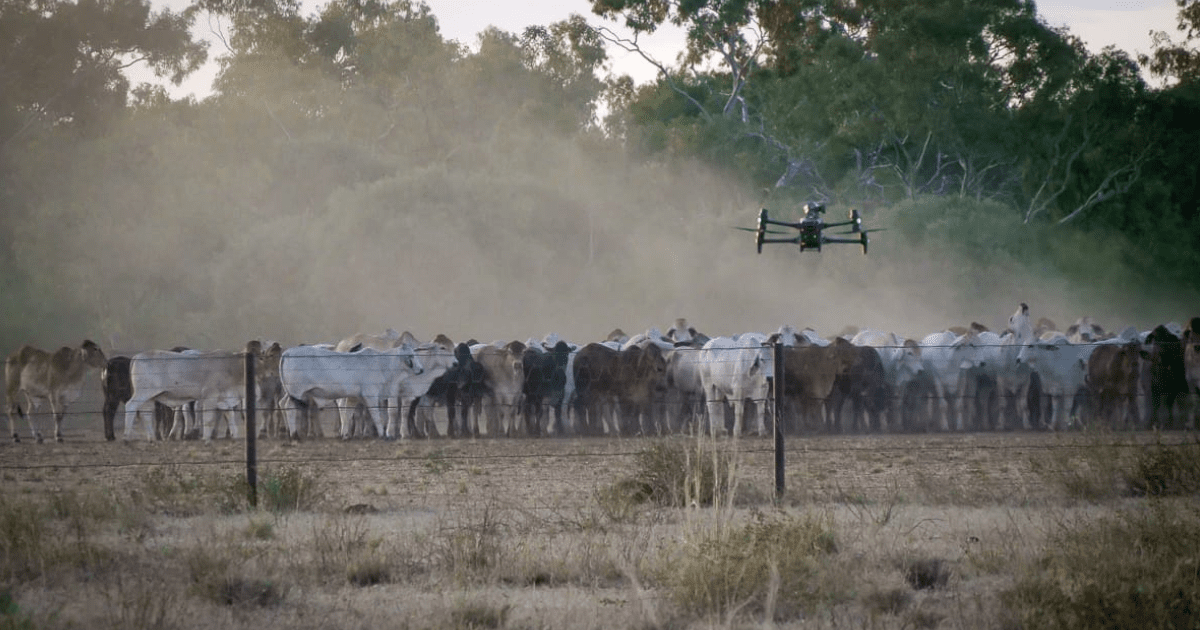
The use of drones in agriculture for livestock monitoring, involves aerial surveillance of animals, for mustering and checking their well-being, taking out the time and cost for manual mustering and checking by vehicle. Livestock monitoring with drones allows farmers to efficiently track the health, behaviour, and location of their animals across vast areas of land.
Companies like SkyKelpie are aiming to encourage the widespread adoption of drone use in agriculture for livestock locating and mustering tasks. Currently, livestock mustering is predominantly carried out by graziers using traditional methods such vehicles, motorbikes, horseback and for vast geographical regions by helicopter. However, these conventional practices can be unsafe and incur substantial costs, both financially and in terms of time, as they require significant resources and labour. Ag drones also use the power of drones to locate and map tagged animals, while Drone Hand offers a subscription based drone flight app to reduce the cost, risks and time spent on livestock monitoring.
Plant Health Monitoring
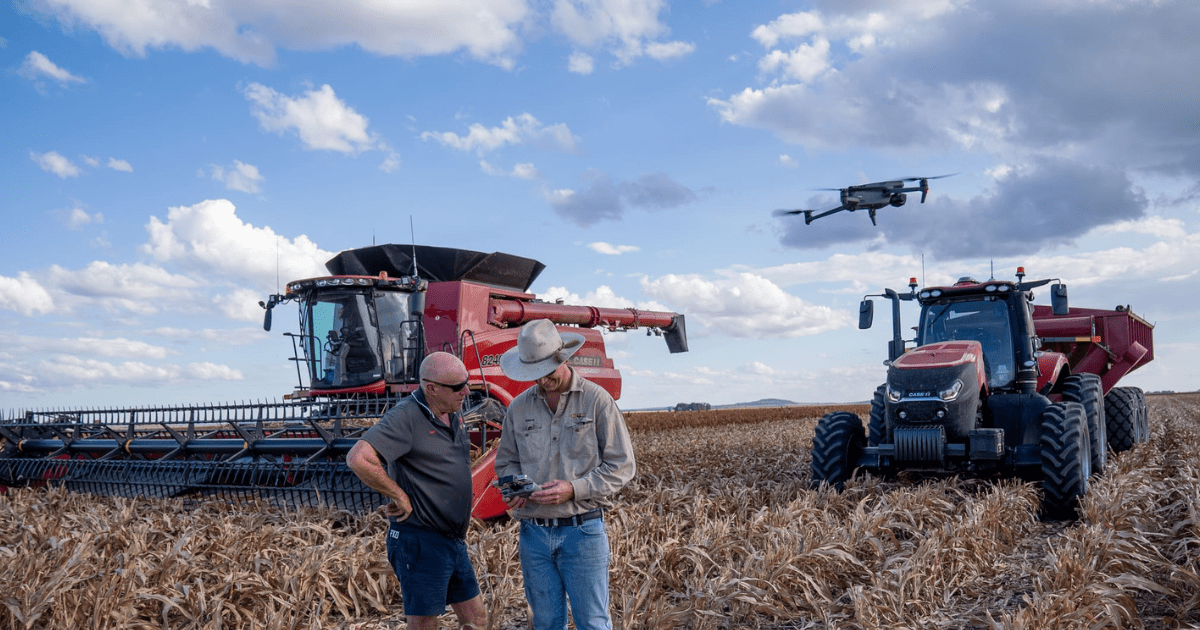
Another important use for drones in agriculture is plant health monitoring. Ensuring the health of crops is vital for achieving good yields, and drones equipped with RBG cameras, thermal imaging, and multi-spectral imaging provide real-time data on various factors that affect crop health. Traditionally, farmers relied on visual inspections and soil analysis, which were time-consuming and often lagged behind in providing real-time insights.
Drones, however, offer immediate and accurate data. Prisma Technologies, for example, fly over fields and collect data on plant count, health conditions, and soil composition, enabling farmers to identify areas of concern and take proactive measures to address them.
Water Management and crop surveillance
With drones covering a Birds Eye view, they can therefore assist in water management by mapping flows and surveying crops for the improvement of irrigation practices. By employing drones, farmers can precisely pinpoint areas of inefficiency or potential leakage, thus conserving precious water resources. Additionally, they offer detailed insights into soil moisture levels and crop water stress through aerial surveys. This allows farmers to adjust irrigation schedules based on real-time data, reducing water wastage and promoting sustainable agricultural practices through targeted irrigation management.
Spraying and fertiliser application
One of the most beneficial uses of drones in agriculture is drone weed mapping with precision spraying and fertiliser applications. This allows farmers to accurately and efficiently target plants, saving time and money by reducing the amount of chemical wastage. Spraying and fertiliser applications with drones is something that XAG Australia’s spray drones specialise in. These drones are also equipped to aid in weed detection providing farmers with valuable insights to effectively manage weed infestations and maintain crop health. By detecting weeds early on, farmers can implement targeted control measures, minimising crop damage and optimising yields.
-width-1680.png)
What are the benefits of using drones in agriculture?
- Improved efficiency: agriculture drones enable farmers to survey large areas of land quickly and efficiently, saving time and labour compared to traditional ground-based methods.
- Cost savings: enabling precision application of inputs, such as water, fertilisers, and pesticides, using drones in agriculture enables farmers to optimise resource use and reduce input costs. Additionally, by automating tasks like crop monitoring and field inspections, agriculture drones minimise labour costs.
- Sustainability: in addition to reducing non-target chemical use, drones in farming allows real-time monitoring of crop and animal health, supporting timely decision-making that promotes sustainable farming practices and improves land management.
- Real-time data: instant insights provided by agriculture drones enable proactive decision-making, helping farmers address issues before they escalate.
- Improved safety and accessibility: unmanned and agile, agriculture drones can safely access areas of a farm that may be difficult or dangerous for humans to navigate (such as steep terrain or dense vegetation) improving workplace health and safety outcomes.
What are the challenges of drones in agriculture?
Initial investment
The upfront cost of high-quality agriculture drones, along with ongoing software and maintenance expenses, can be prohibitive for smaller farms. Balancing these costs with the potential benefits of drones in farming requires careful consideration.
Regulatory hurdles
Airspace regulations are complex and navigating them can be a deterrent to the adoption of drones in agriculture. Many countries require permits, compliance with aviation authorities, and adherence to no-fly zones. These rules can add administrative burdens to farmers, and restrict the use of drones in agriculture.
Technical expertise
Flying an agriculture drone and analysing the data it collects demands specialised skills. Without appropriate upskilling, operators may struggle to fully leverage the benefits of drones in farming, risking not only physical damage to the drone, but inaccurate interpretations and application of results.
Potential future uses of drones in agriculture
Autonomous drones
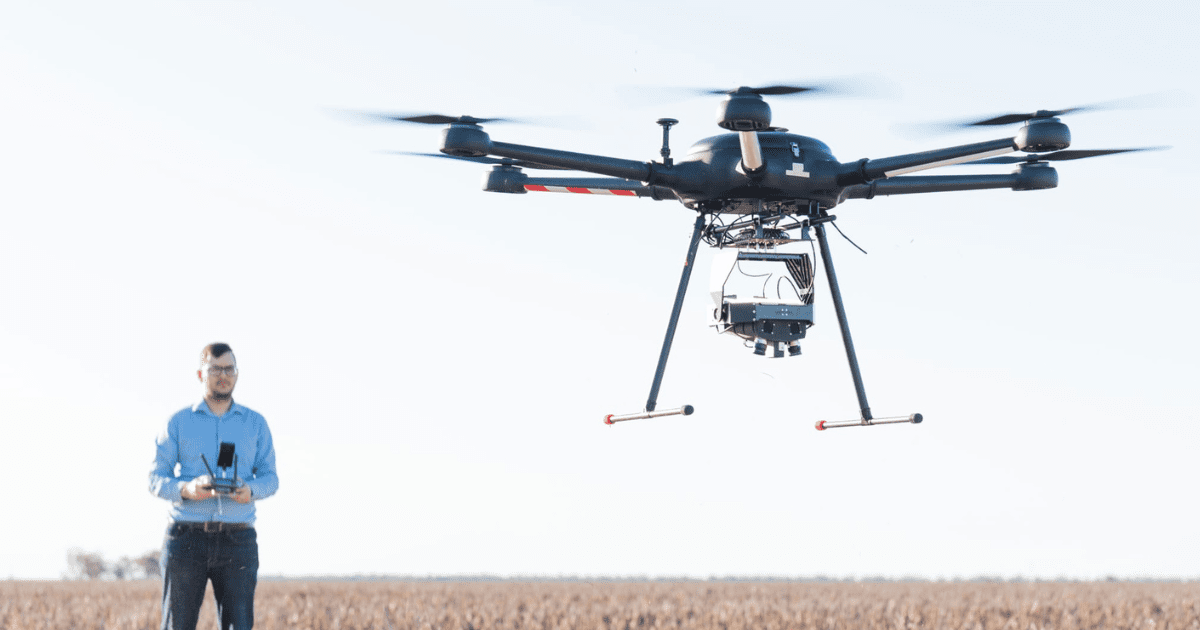
While today’s drones in agriculture need a farmer behind the controls, the next generation of drones will likely be autonomous – requiring minimal human intervention. The result will be agriculture drones that operate like a robotic farmhand, performing routine tasks like monitoring crops and livestock, detecting issues, and implementing solutions on their own. This advancement will reduce labour requirements and make farming operations not only safer, but more efficient.
Integration with AI & complex systems
The integration of agriculture drones with artificial intelligence represents the future of precision farming. AI-driven systems will enable drones in farming to autonomously collect and analyse data, identify issues, and take corrective actions without human input.
By leveraging machine learning, these drones will adapt to changing conditions, optimise resource use, and improve overall farm management. As technology advances, AI-powered agriculture drones will play a central role in revolutionising farming, offering innovative solutions to meet the challenges of modern food and fibre production.
Scale of use
As drone technology becomes more accessible in both price and the number of providers offering targeted drones in agriculture solutions, adoption is expected to scale across farms, regions, and countries.
The ‘farm of the future’ might see multiple agriculture drones working collaboratively on a single farm, while a network of agriculture drones across regions could enable data sharing and broader insights that enhance industry decision-making, learnings, and improvements.